At 18, Shania Bennett Turns College Opportunities into Stepping Stones


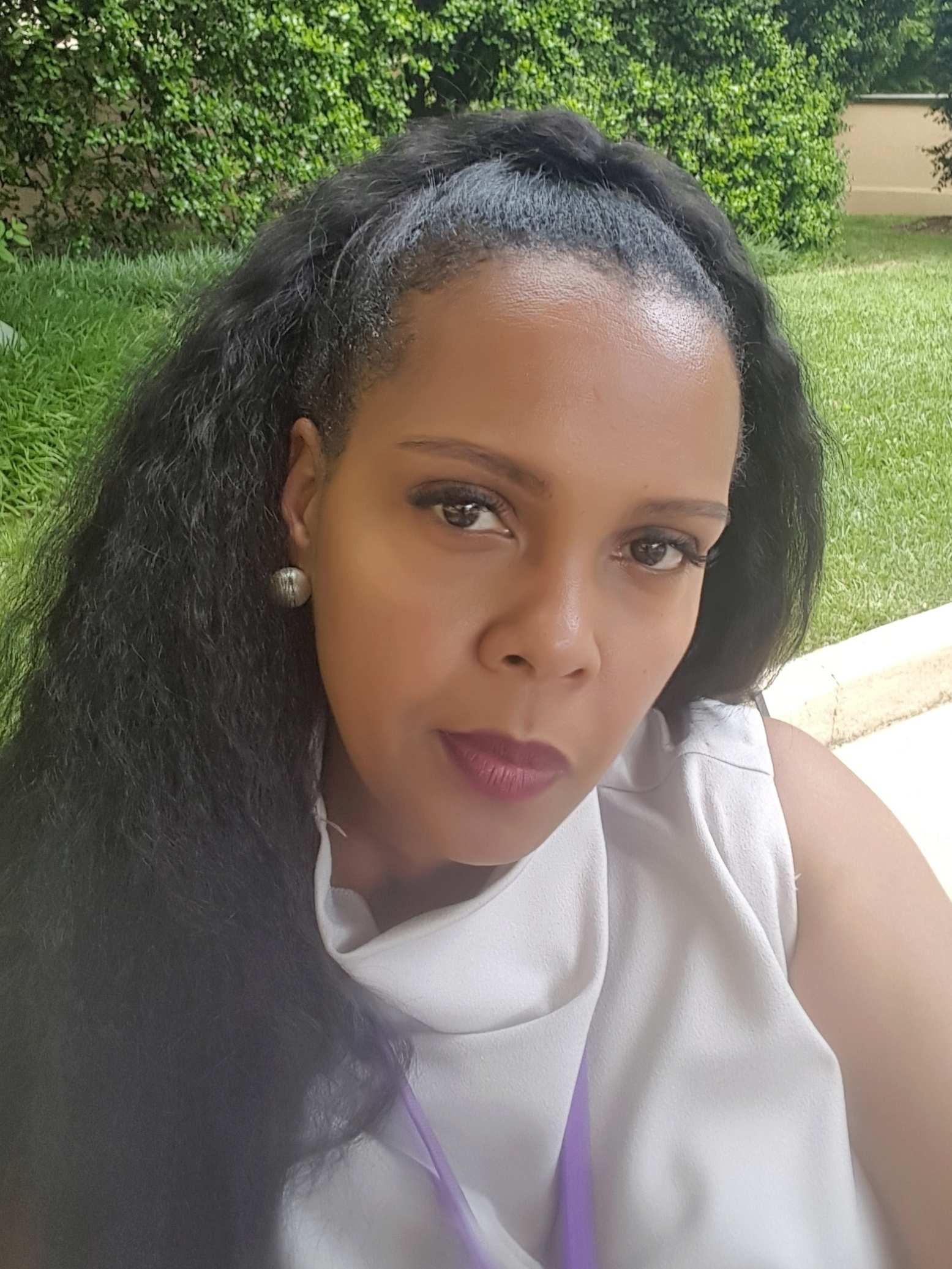
In April, clad in her power suit and professional high heels, Shania Bennett, 18, stood on the steps of Pennsylvania's Capitol building in Harrisburg and declared herself to the world.

"When I come here, I feel great," said Shania, who joined other students from Community College of Philadelphia in lobbying for improved funding for community colleges. At that time, she was a dual enrollment student, which meant she was taking college classes while finishing up high school classes at Girard Academic Music Program High School in Philadelphia.

"I feel like I belong here,” she said as she met with her state representatives and state senators in pursuit of increased funding for the state’s 14 community colleges.

She took what she learned to heart. On June 4, Shania was elected ward treasurer, perhaps the youngest in the city. In May, Shania won a committee person's seat in the 48th Ward's 12th District in South Philadelphia. Her election is part of a city-wide drive to bring fresh air and fresh effort into a city pressed hard by poverty.

"My mindset is that somebody has to do it and that somebody is me," said Shania, who grew up in a poverty-stricken area of South Philadelphia.

As young as she is, Shania's no stranger to politics. For two consecutive years, she has traveled to Harrisburg as part of the College's annual Lobby Day event. Specifically, the students shared their stories and their dreams. They also sought a $10.6 million increase in the state's appropriation to community colleges, with $1.4 million of that slated for Community College of Philadelphia.

The dual enrollment program at the College allows high school students to take classes at the College for free or deeply discounted. The College enrolled 655 high school students in the fall and 778 in the spring. Among them were six students from MaST Community Charter School in Northeast Philadelphia who earned their associate degrees in business before they received their high school diplomas and 121 ninth graders  from the Parkway Center City Middle College, which was in its inaugural year. By the time they are seniors, they will have earned an associate degree or certificate. Shania earned about 40 credits, with some of her college work also fulfilling high school requirements. 

Shania, who studied criminal justice courses at the College, followed in the footsteps of her brother, Juwan, who also took courses at the College while in high school. He's pursuing his doctorate's degree at Temple University.

Shania will attend Pennsylvania State University in the fall, coming in with enough college credits to allow her to graduate by the age of 20. She expects to be a lawyer within five years.

In the meantime, though, she and her classmates absorbed the lessons they learned on Lobby Day on April 10, as they traveled with Stephen Jones, an assistant English professor, and Gilberto Gonzalez, a designer in the marketing and government relations department. Jones and Gonzalez are co-presidents of the College’s faculty, staff and adjunct union, the American Federation of Teachers Local 2026, which co-sponsors the Lobby Day trip.

Summary
In April, clad in her power suit and professional high heels, Shania Bennett, 18, stood on the steps of Pennsylvania's C…
Publish Date
Jun 13, 2018
Original nid
3934

What's it like to Graduate from College before You Finish High School?


Six high school seniors graduated from Community College of Philadelphia on May 5–and, in an unusual twist, they received their first college degree before they officially earned a high school diploma.

The students, all seniors from the Mathematics, Science and Technology (MaST) Community Charter School in Northeast Philadelphia, are the first MaST cohort to complete the MC2 dual enrollment program, dividing their day between high school classes, online classes and college-level courses at the College’s Northeast Regional Center.

They began college as high school sophomores after completing entrance exams and have taken about 60 credits to earn an Associate in Arts degree in Business. On May 5, they were among the 1,885 candidates for degrees and certificates in the Class of 2018.

“I would love to see every high school student have an early college experience of some sort,” said Dr. David E. Thomas, associate vice president for strategic initiatives and dean of the Division of Access and Community Engagement. “We want high school students to be able to dip their toes into the rigors of college life.”

All high achievers with serious ambitions, the MaST students are on track to complete their undergraduate education in two more years, positioning them to finish a baccalaureate degree by the age of 20. They graduate from MaST on June 15 with ceremonies at Holy Family University.

“They are extremely motivated,” said MaST Chief Executive Officer John F. Swoyer III, describing the students as leaders involved in many activities, clubs and sports at MaST. “They aren’t going to wait for the future. They are going to take on the future right now.”

Swoyer said the students gained maturity and time management skills and appreciated the opportunity to save money on their college educations, since they are already about half way to a bachelor’s degree. “It saves them the cost of carrying those credits at college prices,” he said.

This initiative is just one of the programs underway at the College designed to increase the pipeline of talent flowing from Philadelphia high schools to the College. This year, for example, marked the opening of Parkway Center City Middle College, with the entire class of ninth graders from what was once known as Parkway Center City High School beginning to take courses on Main Campus. That cohort of high school students is on track to earn associate degrees or credentials by the time they graduate from high school.

Research shows that high school students who attend college classes are more likely to enroll in college and remain there. Through its dual enrollment programs, Community College of Philadelphia provided a record number of high school students with access to college classes this year, with 1,433 students earning 6,791 credits in the 2017-2018.ng semesters.

MaST's soon-to-be college graduates are tired, but happy. They will be the first to tell you they’ve done their fair share of homework these past two years – assigned by college faculty and high school teachers.

"When our principal told us we were going to get our associate degrees before we graduate from here, I said, `WOW!,'"  Selwin Varughese, 18, said. The classes he took at the College helped him to expand his career choices as he shifted from engineering to business, which he'll study at Temple University next year. Varughese has a 3.72 grade point average from the College.

Carrying a grade point average of 3.93, Sabrina Fiocca, 18, plans to major in biology at Temple University, heading next to medical school. "I'm more prepared for college. I know how the classroom works and how the assignments are," she said. "This is like training wheels for college."

Carson Lo, 18, a future engineer inspired by the possibility of exploring Mars, is trying to decide between Pennsylvania State University and Drexel University. He appreciated the opportunity to study business, since he wouldn't likely have room on his college engineering roster for those courses. "It's sort of like a double major," said Lo, who has a 3.94 grade point average.

Anthony Rodriguez, 18, who earned a 3.37 grade point average and plans to major in computer science at Millersville University, said he liked the intellectual challenge and pace of the college courses, compared to high school classes. "The things we learned were more applicable to our lives," he said.

Mackenzie Schoen, 17, with a 3.94 grade point average, is advising her younger sister at MaST to try MCinstead of pursuing Advanced Placement courses.  Scoring well in AP exams may result in credits for a few courses, but the MCprogram, she said, provides an associate degree. "You get more out it," she said. Schoen plans to major in computer science at Temple.

"At first it was really scary," said Savannah Zazulak, 18. "But as time went on, I learned to balance things and manage my time. Whenever I had a hurdle, I'd talk to my parents and they'd remind me that this program was so worth it and every ounce of stress and energy is going to really help me in the end. Now I'm really seeing that." A future pediatrician, Zazulak, who earned a 3.17 grade point average, will enroll in Bryn Athyn College's pre-med program.
Summary
Six high school seniors graduated from Community College of Philadelphia on May 5–and, in an unusual twist, they…
Publish Date
May 9, 2018
Original nid
3923

The Most Overlooked Security Tip: Learn How to Listen


Kathy Mulray, the director of Community College of Philadelphia's Northeast Regional Center, recently organized a seminar where students and public safety experts could talk, as well as listen, to each other.

The event comes in the wake of the Feb. 14th mass shooting at Marjory Stoneman Douglas High School in Parkland, Fla., and news reports that students and staff at the school felt their security concerns often had been ignored.

"We want to catch the problems before they happen," Randolph Merced, College director of Public Safety said, speaking to the crowd of about 100 people gathered at the Northeast Regional Center on April 3.

Panelist Detective Joseph P. Rovnan, from the Philadelphia Police Department's counter terrorism operations unit, also emphasized the important role played by ordinary members of the public.
 
"You are a critical part of the security of this institution," he said, so it's important to "trust your suspicions," report them. Also, he said, take time to learn the layout of classroom buildings, so in the event of a problem, people are better prepared to "run, hide and fight," in that order.

Besides Rovnan, panelists included Philadelphia police department officials Lt. Brian Gress, from counter terrorism operations, and Sgt. John Venit, a tactical specialist from the City's eighth police district. Richard Turzanski, a former student at the College, and an inspector from the U.S. Department of Homeland Security, served as moderator while his supervisor, John J. Guest, regional director of the Protective Security Coordination Division, sat in the audience.

Topics ranged from mass shootings and techniques for staying safe to police shootings and community relations.

"As a cop, the hardest part of the job is relating to the community and not being seen as an adversary," Gress said. Even when insulted, officers must remain professional, he added.

It was a message heeded by Ronnie Diez, 21, of North Philadelphia, studying criminal justice. "You have to let it go," said Diez, who plans to join the Pennsylvania State Academy in July.

Farah Humeidi, 19, of Northeast Philadelphia, a criminal justice student who aims to join the Federal Bureau of Investigation, said the talk motivated her, particularly the emphasis on relating to the community.

According to Merced, public safety is a top priority at Community College of Philadelphia where upgrades have been in made to public safety’s technology infrastructure and security protocols and procedures have been updated. Specifically, he cited the upgrades and improvements in the closed-circuit television video surveillance system, tightened security at all access points, investments in training and greatly enhanced message alert systems.

The College community can bolster these efforts by following the practices and procedures already in place.

  • Wear your Community College of Philadelphia college ID at all times.
  • Use emergency exits only during emergencies as they might provide access to unwanted guests or visitors.
  • Attend workshops on a regular basis to learn about the new alert systems and security protocols.
  • Take personal security precautions and be observant at all times.
Summary
Kathy Mulray, the director of Community College of Philadelphia's Northeast Regional Center, recently organized a semina…
Publish Date
Apr 24, 2018
Original nid
3903

Taking the Lead in Preventing Sexual Assault and Harassment on Campus


Professionals from colleges and universities across the Greater Philadelphia region convened on the Main Campus for the 2018 Judicial Affairs Best Practices Conference.

Randolph Merced, the College’s director of safety and security, said this year's programs centered around sexual assault and harassment with the intent of creating a collaborative learning experience for "everyone who works with our students in any academic or social setting throughout their journey as a learner . . . I created this conference in 2009 from an idea of getting professionals from the judicial affairs, student affairs, campus police and conduct administrators together as an information sharing activity."

 Merced said he took a slightly different approach with the planning of the 2018 conference. Community members were invited to join the conversation and attendance was free, part of his continuing emphasis on security as a shared responsibility.

 “This symposium is an exchange of ideas and best practices and too important to leave people out because of limited resources," said Merced. "I kept it as a collaborative effort so we can generate a powerful audience who appreciate the networking and information sharing without incurring any cost."   

Kelley B. Hodge, Esq., who served as the 25th District Attorney of Philadelphia on an interim basis, delivered a keynote address on The Responsible and Listening University with a message focusing on "supporting victims, reducing victimization, and being fair to all involved" in instances of sexual assault, harassment and violence.

She explained that this is made possible when institutions take intentional steps to improve chain-of-communication, enhance preventative measures, and ultimately increase campus safety and the student’s sense of safety.  

"Sexual assault, sexual harassment, intimate partner violence—is enveloping our society [and] has enveloped our communities. No one, no place is immune to it," said Hodge in an interview. "It requires us to be vigilant, to share information, to try and do everything that we can to...improve our systems to create accessibility so that hopefully we can reduce it—if not eliminate it; that would be ideal."

Using high profile cases and personal experiences as examples, Hodge explored the importance of self-awareness, cultural competency, implicit bias awareness, and identifying the gaps within each attendee's higher education institution.  

"This conversation is part of a layering that needs to be ongoing. I think with education, when you're talking about prevention, you need to layer. And so, this shouldn't end today," said Hodge. "As long as the pain of being a victim of violence exists, this is a conversation that needs to remain at the top of the leadership board in terms of what needs to be addressed and focused on by schools and universities."

The day-long program featured numerous breakout sessions including one led by Merced, one on the importance of including the LGBTQ community when addressing sexual violence on college campuses and another addressing Title IX best practices.

The symposium was among the various workshops and lectures included in the 19th Annual Law and Society Week, presented by the College’s Fox Rothschild Center for Law and Society. The other activities engaged students and guests in topical issues such as gerrymandering, immigration, restorative justice and more. Attendees received insight and practical advice from experts, including District Attorney Larry Krasner, who discussed the high rate of incarceration and his strategies for a fairer criminal justice system Additionally, this year, conference organizers built a public service component into its sessions. Students and guests showed their generosity by donating clean new or gently used professional attire to a clothing drive benefiting Career Wardrobe. 

Summary
Professionals from colleges and universities across the Greater Philadelphia region convened on the Main Campus for the …
Publish Date
Apr 2, 2018
Original nid
3887

The Scholarship That Helped Deesha Dyer Land A Dream Job at the White House


Deesha Dyer served as White House Social Secretary and advised the President of the United States but she might never have reached Pennsylvania Avenue without the scholarship provided by the Philadelphia chapter of the National Coalition of 100 Black Women, Inc.
 
She said that scholarship kept her moving forward at an unsteady time during her academic journey.

“This is the scholarship that was available for me,” Dyer told the coalition members at the Madam CJ Walker Awards Luncheon at the Sheraton Hotel on March 17. “You have to understand that, because of this scholarship, that was the reason why I was able to continue in school and that was the reason why I was able to be an intern for President Barack Obama and continue school and that was the reason why I was able to be an intern for President Barack Obama and that is why I was the last employee person to walk out of the White House on Jan. 17, 2017 (as President Obama left office).”

(Scholarships can and often do keep students from stopping out or dropping out of community college, added Gregory Murphy, the College’s VP for Institutional Advancement in an interview. This semester alone, the College will award $120,000 in scholarships, part of its ongoing commitment to promote student success and credential and degree completion.)

Dyer, a renowned alumna who often discusses Community College of Philadelphia’s transformative effect on her life, had a triumphant return to the Coalition luncheon, returning in 2018 as its keynote speaker.

Now a creative event strategist and motivational speaker, Dyer shared her unconventional career path to Washington D.C., which began when she restarted life at the age of 27 by enrolling in Community College of Philadelphia. From there, she scored a nonpaid internship at the White House and then was hired fulltime.  She missed her own College graduation because she was traveling with President Obama.

The crowd was hushed as Dyer encouraged audience members to look out for each other, as both a wellness and career strategy. Before she spoke, Pennsylvania Gov.ernor Tom Wolf encouraged Deesha to contact him should she want another public sector job and Mayor James Kenney provided her with a miniature Liberty Bell, a symbol of the City’s affection for its hometown girl.

Ms. Anyssa Elmanfaa, a student who sat at a table filled with other women from Community College of Philadelphia, listened intently to Deesha’s remarks. An international studies major, Anyssa was soaking in the atmosphere and networking with a lot of the city’s VIPs, women especially.

Anyssa has found that the College offers opportunities to engage with classmates and staff and get involved with community issues such as domestic violence and immigration.

“As a home schooled student, I didn’t have that interaction with a large student body,” she said. “I found myself at a disadvantage.”

She is reaping rewards from her decision to apply classroom lessons beyond the campus.

Anyssa recently was selected as the American Association for Women in Community College’s Region One 2017-2018 scholarship winner. In addition to the $500 scholarship, she also will receive a one-year membership to the National AAWCC, which will allow her to further enhance her college experiences and network.

In addition, Deesha Dyer, strolled over to the College’s table at the luncheon, just to meet Anyssa and offer mentorship and support. “Deesha turned to me and smiled as she put her hand over mine, and said, ‘Take your time. Your education is your gift. Take it easy and do your best.’"

Anyssa concluded, “Deesha taught me that you don’t have to be "Harvard" to succeed.”

Summary
Deesha Dyer served as White House Social Secretary and advised the President of the United States but she might never ha…
Publish Date
Mar 28, 2018
Original nid
3881

Coming Together to Remember the Ladies Who Fought for Freedom


Angela Dodson, renowned journalist, editor and author of "Remember the Ladies: Celebrating Those Who Fought for Freedom at the Ballot Box,” says the history of the women’s suffrage movement holds crucial lessons for the scial movements today.

The beginnings of the women’s suffrage movement can be traced back to the anti-slavery movement in Philadelphia. Many of the same women were involved in both causes, she said. Even then, blacks and whites served as allies whose causes intersected and bonded their lives together.

They were activists with a multitude of causes, rather than mothers and sisters with a singular focus. Many of these ladies joined the temperance movement and the free produce movement, which urged citizens to boycott products made with slave labor.

“They went from one meeting to the next, from temperance to abolitionist to free produce meetings,” Dodson explained. Each group then benefited from having well-informed allies that they could call upon as needed.

Dodson’s celebrated book takes readers along their extraordinary journey, where social movements over the decades intersected, sometimes battled and aligned. Fast forward to today, where a greater proportion of American women than American men currently vote but no woman ever has been elected President in United States.

“I really want the book to be a conversation starter about where American women are politically … and why we can’t seem to get to the White House or even see it from here,” Dodson told the audience at the Winnet Coffeehouse at the event commemorating Women’s History Month.
 
Dr. Claudia Curry, director of the College’s Women’s Outreach and Advocacy Center, moderated the program. President Guy Generals offered opening remarks, stressing the importance of sharing the stories of the remarkable women in our own lives as well as the stories of sheroes.

Dodson’s remarks were followed by a panel discussion where students Anyssa Elmanfaa,nCameron Battle-Bradshaw and Katherine Freni discussed applicable lessons they had taken from the lives of Sojourner Truth, Shirley Chisholm and Lucretia Mott.

Afterward, Dr. Tabitha Morgan, assistant professor of English and instructor of the College’s Women’s History class, echoed the theme of the day: the importance of expanding social movements to include a wider range of allies.

“We are so fractured,” Morgan said. “How can we work together and be stronger and better?”  Dodson said many people thought that giving women the right to vote would change the nation dramatically. Some thought, “it would end war, maybe crime, and our schools would be better. But women didn’t vote as a bloc,” she explained. “They voted their specific interests and, in some cases, their husband’s interests.”

The diversity dialogue is one of many events happening across the city as Philadelphia prepares to mark the death of Dr. King on April 4. This event is part of a series of conversations held citywide to recall King’s impact and legacy.

After Democratic candidate Hillary Clinton lost the 2016 presidential election - even though she actually won the popular vote - energy has flowed into the women's movement. Since 2016, more than 30,000 women have sought support to run for public office.

Said Dodson, “It feels as though we are at the cusp of change.”

Summary
Angela Dodson, renowned journalist, editor and author of "Remember the Ladies: Celebrating Those Who Fought for Freedom …
Publish Date
Mar 26, 2018
Original nid
3879

Colonials Head into the Playoffs as Conference Champs


The Colonials emerged as champions of the Eastern Pennsylvania Athletic Conference Championship (EPAC) and now rank fifth in the National Junior College Athletic Association(NJCAA) Region XIX, Division III.

Their 17-5 record in the regular season play has earned them a berth in the Division III playoffs. The Colonials will play Northampton in Bethlehem, Pa. on Tuesday, March 27th at 7 pm. Admission is $3 for adults and $1 for students. 

This has been a stellar season for the team and for Jaylen Nixon, who received 1st team All-EPAC and was voted “Player of the Year." Malachi Thompson was awarded 2nd team All-EPAC honors.

The Community College of Philadelphia Colonials have fielded powerhouse basketball teams for many decades. Outstanding basketball alumni include former Philadelphia 76er Ollie Johnson and Ronald Murray, who played for the Milwaukee Bucks.

Under head coach Joe Rome, the Colonials won the championship title for the National Junior College Athletic Association (NJCAA) Region XIX Division III conference in 2014-2015, the first year of the team’s playoff eligibility.

Over the years, athletes at the College have balanced jobs and challenging classes as they have paved a path to possibilities in basketball.  Nixon, a forward for the Colonials, stands at 6’3” tall and averages about 20 points and roughly 6 rebounds per game. 

“My team is like my family – they’re more like brothers here. I think this is the greatest team I’ve played on,” said Nixon. “The one thing I learned from playing basketball here is if you’re not focused on the classroom, you can’t be focused in the court.”

Coach Rome added this team has worked hard in the classroom as well, “We have a good group of freshmen on this team. They work hard in the classroom and on the court. In order to win in basketball, you have to succeed in learning too.”

Summary
The Colonials emerged as champions of the Eastern Pennsylvania Athletic Conference Championship (EPAC) and now rank fift…
Publish Date
Feb 22, 2018
Original nid
3846

A New Apprenticeship in Philadelphia Strengthens Education for Early Learners


As Philadelphia and other major cities move to fill early childhood education centers with well-qualified teachers, there is growing concern that these efforts might threaten the jobs of those who don’t have, or can’t afford, a college degree.

District 1199C Training and Upgrading Fund, a Philadelphia-based nonprofit, is working with educators at the College on the Early Childhood Education Teachers Apprenticeship program, which places day care workers on long-term career pathways leading to higher pay, and supports the campaign to provide quality Pre-K education for the City’s children.

These high-quality and accelerated career pathways are at the center of Fueling Philadelphia’s Talent Engine, Mayor Kenney’s newly announced workforce strategy which seeks to address the deep-rooted poverty that affects so many Philadelphians.

A few years ago, Cheryl Feldman, executive director of District 1199C Training and Upgrading Fund, reached out to Amy Saia, an assistant professor of early childhood education at the College and the pair began a collaboration that now connects 36 apprentices with 20 employers, including nonprofit, for-profit, union and nonunion.

“The Early Childhood Education Apprenticeship Program is a game changer,” Feldman said. “By aligning with Community College of Philadelphia’s associate degree curriculum in Early Childhood Education and combining on-the-job learning competencies and mentors, it creates an accelerated path with the goal of creating a pipeline of highly skilled, degreed teachers.”

Saia added, “We want to increase the size of the workforce and we want to support them so they earn more wages.”

The apprenticeship program allows full-time child care workers who hold a Child Development Associate (CDA) certificate to earn an associate degree in Early Childhood Education (Birth to 4th Grade). During this two-year program, workers in local child care centers receive 18 college credit for prior on-the-job learning along with wage increases and mentors. The Delaware Valley Association for the Education of Young Children (DVAEYC) supports and mentors the on-site job coaches. Successful completion results in a certificate from the U.S. Department of Labor, an associate degree and lead teacher certification for Philadelphia-area early childhood education centers.

District 1199C recruits the employers and manages the relationships among apprentices, mentors, the College, and state and city agencies. The program is financed through a mix of public and private funding sources. Employers commit to four pay raises and paying 5 percent of an apprentice’s tuition at the College (about $500 a year). The apprentices pay 5 percent of tuition. The rest of the tuition, fees, and materials costs are covered by Pennsylvania T.E.A.C.H. scholarships.

For Corinne Bale, the program has been her long-awaited opportunity to finish her degree in education. She obtained her CDA certificate and landed a job as an early childcare professional at SPIN Inc., a provider of early childhood education in Northeast Philadelphia. Bale, who has been teaching for 15 years, said she’s now on track to receive an associate degree by summer 2018.

“I’m really benefiting from the program. I’m getting the schooling toward my degree and I’m still able to work. The College is very supportive and helpful with the way they collaborate with my employer,” said Bale. “I’ve been working for so many years with the pre-toddler class and through this apprenticeship, and going to classes, I’m able to come back to my own classroom with new ideas.”

According to a 2015 report by the Bureau of Labor Statistics, a child care worker in Pennsylvania earns an annual median salary of $19,590; the media salary for a preschool teacher is $25,970. By the time Bale completes her apprenticeship and receives her associate degree, she will see a 30 percent increase in overall wages.

For her, the program is convenient because it combines work and learning.

The College also has a transfer agreement with Drexel University which extends the career pathway and enables apprentices to earn their bachelor’s in Elementary Education (Pre-K – 4th Grade) with a certification.

“The apprenticeship program is like a ladder,” said Chae Sweet, Dean of Liberal Studies. “The more education they receive, the more the wages are increased.”


Summary
As Philadelphia and other major cities move to fill early childhood education centers with well-qualified teachers, ther…
Publish Date
Feb 14, 2018
Original nid
3839

Men’s Basketball Team Vying for A Spot in Playoffs


With three home games left in the regular season, Community College of Philadelphia’s men’s basketball team is ranked the 9th best team in the nation by the National Junior College Athletic Association (NJCAA) Division III Men’s Basketball Poll Committee with an impressive 15-5 record.

The Colonials are vying for a spot in the playoffs and have three home games left:

Attendance at the games is free and open to the public. The home games are:

Jan. 27 – Lehigh Carbon Community College at 3 p.m.
Feb. 6 – Northampton Community College at 7 p.m.
Feb. 13 – Brookdale Community College at 7 p.m.

Under head coach Joe Rome, the Colonials took home the championship title for the NJCAA Region 19 conference in its 2014-2015, the first year of the team’s playoff eligibility. The team’s stellar season resulted in it being ranked 1st in the NJCAA Region 19 and 6th among all Division III colleges nationwide as the Colonials headed into the championship.

Over the years, the basketball players at the College have balanced jobs, taken challenging classes, and at times held fulltime jobs as they have forged a winning tradition. Outstanding alumnus include former Philadelphia 76er Ollie Johnson and Ronald Murray, who played for the Milwaukee Bucks.

Jaylen Nixon, a forward for the Colonials, stands at 6’3” tall and scores about 20 points a game. In addition, he averages 5-6 rebounds per game. He said he is optimistic about winning the playoffs and taking home the championship title.

 “My team is like my family – they’re more like brothers here. I think this is the greatest team I’ve played on,” said Nixon. “The one thing I learned from playing basketball here is if you’re not focused on the classroom, you can’t be focused in the court.”

Coach Rome added, “We have a good group of new freshman on this team. They work hard in the classroom and on the court. In order to win in basketball, you have to succeed in learning too.”

Check out the schedule for upcoming games.

Summary
With three home games left in the regular season, Community College of Philadelphia’s men’s basketball team …
Publish Date
Jan 22, 2018
Original nid
3821

Phi Theta Kappa Inducts 145 Scholars Who Are Ready to Give Back


 When Barb Thiel approached the stage to receive her white rose, a symbol of a newly developed relationship during her induction into the Phi Theta Kappa (PTK) International Honor Society, she thought, “Wow, look where I am – I never thought I’d care about education.” 

Thiel, a Theater major who is on track to graduate in spring 2018, was one of 145 students inducted into the prestigious honor society as friends, family, faculty and staff filled Bonnell Auditorium in November 2017 for the fall PTK Rho Upsilon Chapter induction ceremony. Every semester, 1,200 to 1,400 students from the Phi Theta Kappa Middle States Region, which includes Delaware, District of Columbia, Maryland, New Jersey and Pennsylvania, are invited to join the fellowship. There are a total of 81 PTK chapters in the Middle States Region.   

Thiel, who worked as a hairdresser before enrolling in the College, plans to pursue a bachelor’s in Theater at New York University’s Tisch School of the Arts, Columbia University or the University of Southern California.

She, along with the other new inductees, studied long hours, made personal sacrifices and the reward for that effort was a coveted membership in PTK, an International society designated to two-year colleges that fosters leadership skills and promotes community-based activities.

“Phi Theta Kappa provides opportunities for intellectual exchange of ideas. Those who are accepted into the Honor Society have achieved a high level of academic achievement,” said Dr. Mary Anne Celenza, Dean, Division of Math, Science and Health Careers during her welcome address to the students. “Most of these students have full-time jobs and families and they and still excel in academic studies. It’s is an honor for Community College of Philadelphia to have these students. You will all accomplish great things and continue working toward your dreams.”

Community service is a responsibility that accompanies PTK membership. The College’s chapter is working on Commit to Complete, an ongoing initiative that asks students to make a pledge that they will their degrees, said Faith Whitfield, president of the PTK Rho Upsilon chapter. “There’s many reasons people do not graduate... we want to help them stay on track and support them. We believe if students commit to something, it helps the community,” she said.

The Rho Upsilon Chapter held a Commit to Complete event in the Bonnell Lobby in November. Faculty showed up at the event sporting shirts with the colors of their own alma maters to help support students campaign.  “Being a Phi Theta Kappa member has taught me so much about leadership and the value of community service,” said Whitfield.

In addition to helping the College community, PTK members have many perks, including eligibility for $37 million in transfer scholarship money from 700 four-year colleges and universities. 

At the ceremony, Sarah Iepson, associate professor of Arts and Honors and the PTK associate regional coordinator for the State of Pennsylvania, Middle States Region, shared the story of  Dynamite Obinna, a 2013 College graduate. Obinna transferred to Embry-Riddle Aeronautical University in Daytona Beach, Fla., where he recently graduated from an accelerated bachelors/master’s program in aerospace engineering.

She also mentioned two 2014 graduates, Maria Morrero and Vince Ancona. who were study buddies and good friends while at the College. After attending different colleges for the baccalaureate degrees – Bryn Mawr and Bucknell University respectively – the two are study buddies once more, working on their masters at the University of Michigan School of Social Work.

“Being a Phi Theta Kappa member means everything to me. It is giving me the opportunity to apply for scholarships,” said Katy Laye Diop, a second-year student majoring in International Studies. Diop, a native of Dakar, Senegal in West Africa wants to apply to Bryn Mawr once she completes her associate.

At the end of the ceremony, new members held a candle, symbolic of the “torch of knowledge.” Some students wore the Phi Theta Kappa Key pin on their lapel, a gold slab keyed at the top and bottom, the primary symbol representing the Honor Society.

Summary
 When Barb Thiel approached the stage to receive her white rose, a symbol of a newly developed relationship during …
Publish Date
Dec 20, 2017
Original nid
3794

Subscribe to