Asian American Film Festival Takes Its Offerings to Community College of Philadelphia


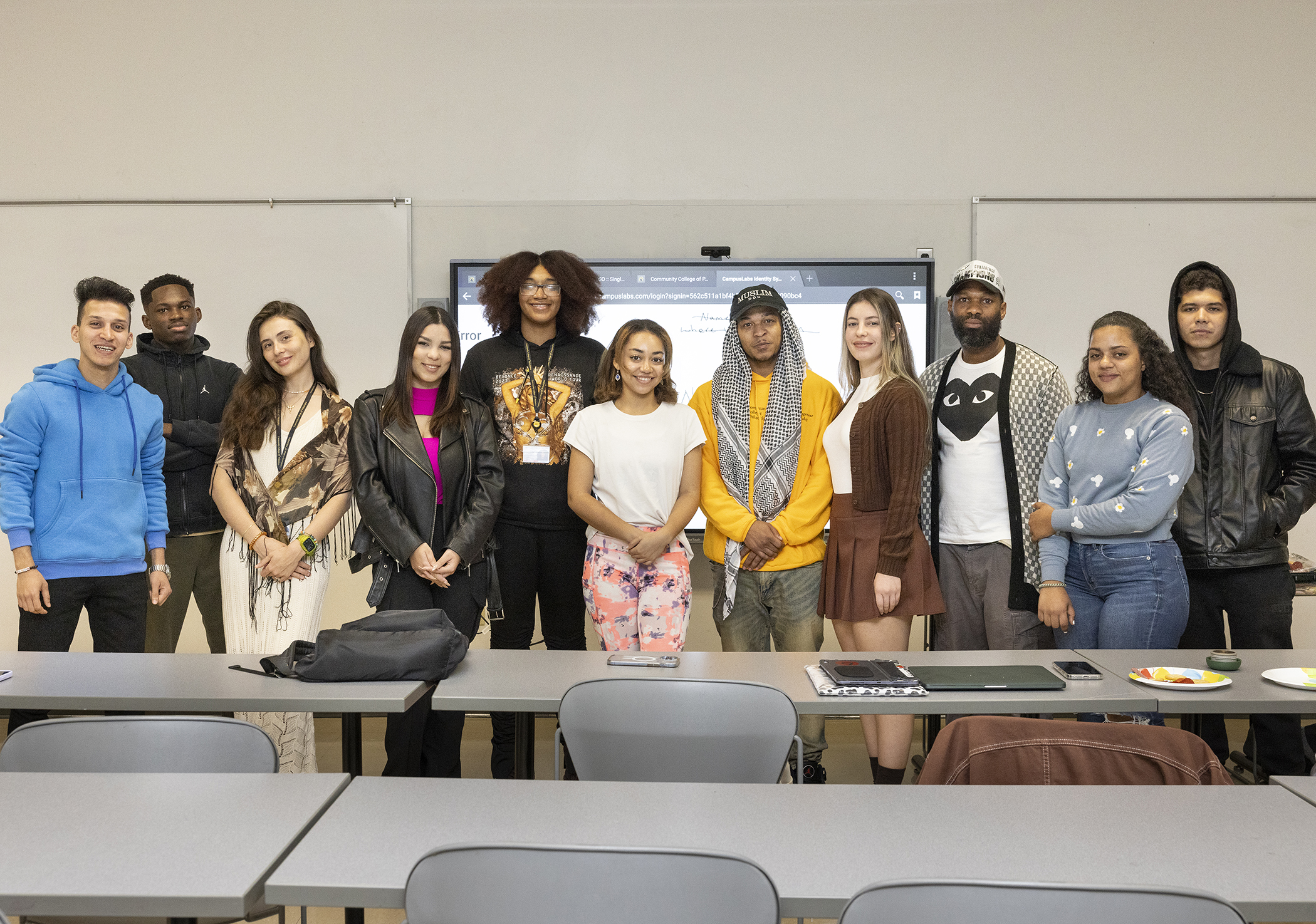
The Philadelphia Asian American Film Festival (PAAFF) this year expanded its venues to include the Main Campus of Community College of Philadelphia, where the diverse community fosters a variety of learning experiences.

The Festival, now the largest Asian American festival on the East Coast, exposes the region to films by and about Asian Americans through an abundance of film screenings and events. The other venues were the International House in University City, and the Asian Art initiative in Chinatown.

“Hosting PAAFF events at the College was important because it offered an opportunity to educate people about Asian American people and cultures,” said Michelle Myers, associate professor of English and a conference organizer. “There is a misperception that all Asian people and cultures are the same, which is terribly inaccurate and serves to erase the true diversity of the Asian American/Pacific Islander community. By presenting more accurate portrayals of the AAPI community’s diversity, we can challenge such views and, hopefully, correct stereotypes that people have held.”

Whether it is fostering an appreciation for the world through its Center for International Understanding or study abroad programs, the College’s international programs and activities allow students to sharpen their critical thinking and analytical skills; and prepare them to embrace a global view. Over the years, student and faculty groups have traveled to countries as extraordinary as Tanzania, Turkey, Japan, and, beginning in 2017, Cuba.

In addition, PAAFF held its first-ever academic mini-conference this year at the College, exploring topics as varied as media representations of Asian American identity; Asian American food, and its function socially, culturally and politically; and representations of culture, gender, and politics in Iranian film.

Serving as a host venue for PAAFF was a natural fit for the College. For the past 32 years, it has celebrated world cultures with the International Festival, a weeks’ worth of multinational dancing, music, workshops and cuisine; all designed to highlight and pay homage to the many cultures of the world.

Through the film festival, the learning continued. A recent screening of the PBS documentary, “In Football We Trust,” which chronicled the emergence of Samoan-American high school football players in a small town in Utah, enlightened members of the College community about culture and customs of Asians and Pacific Islanders that were different from their own.

Azari Jacquan, a Liberal Arts major at the College, said he left the screening with a new appreciation of a culture he knew little about, and the knowledge will be useful to him in the

future: “I’m interested in interpersonal communications. To be able to communicate with people, you have to be educated about their culture,” he said.

Meyers said providing a platform for events such as the film festival positions the College as a place where world views are formed and take hold. “We want to spotlight Community College of Philadelphia as a college where exciting academic work and conversations are taking place,” she said. “Hosting this academic mini-conference was an opportunity to convey the College’s positivity in this way.”

Summary
The Philadelphia Asian American Film Festival (PAAFF) this year expanded its venues to include the Main Campus of Commun…
Publish Date
Dec 8, 2016
Original nid
2452

Langston Hughes and Jazz: A Black History Primer


Dr. Ron McCurdy, a jazz musician and professor of music at the University of Southern California, pays tribute to the works of poet Langston Hughes in a multi-media performance.

The jazz riffs of Ron McCurdy’s sweet trumpet wafted out of the Bonnell Auditorium, piquing the curiosity of passersby. Inside, a sepia image of literary giant Langston Hughes, superimposed on a big screen behind the musicians, provided a fitting backdrop for telling the story of one writer’s struggle for artistic and social freedom.

On Oct. 27, Community College of Philadelphia students watched and listened to a special multimedia concert performance of Langston Hughes’ 12-part, epic poem, “Ask Your Mama: 12 Moods for Jazz,” performed Dr. Ronald C. McCurdy, a professor of music at the University of Southern California, who, along with his trio of musicians, traveled from Los Angeles to educate and entertain the College community about jazz, poetry and justice.

Student Life organized and hosted the concert to recognize and celebrate the diversity in all cultures.

“It is important to remember that our students are not only Latino during Latina/o History Month, gay during LGBT History Month, Black during Black History Month, etc. They are these things all the time,” said David Greene, Director of Student Life. “The mission of Student Life is to help students gain a better understanding of themselves and their communities. The Langston Hughes project allows us to achieve that mission.”

Most students kept their hands in their laps when McCurdy asked them to raise their hands if they had ever heard of Hughes - all the more important to learn about a man who was arguably the most important African American poet of the 20th century; a leader of the Harlem Renaissance; a social activist and one of the earliest innovators of the literary art form known as jazz poetry.

With the help of video montages, the concert performance linked the words and music of Hughes' poetry to topical images of people, places, and events, and to the works of the visual artists Langston Hughes admired. Together the words, sounds, and images recreated moments in African American history, which bridged the Harlem Renaissance and the post- World War II Beat writers' coffeehouse jazz poetry world to the looming Black Arts performance explosion of the 1960s.

Perhaps no one on campus understands music’s connection to learning better than Dr. Donald Guy Generals, the College’s president. Dr. Generals, himself a jazz musician, has played the drums at College events and believes that the arts enrich learning and inspire creativity.

Artists such as Hughes, he noted, evoke questions, provide answers and heighten curiosity that is crucial to student success.

“I think the way that you learn, how you learn, and the company that you keep while you learn, are important,” Dr. Generals said in an interview conducted earlier this year. “The environment in which you learn enables you to be innovative because you are around different points of view. Innovation can manifest itself through many ways, through many media and in many formats. To the extent that we foster curricula that encourages creative thinking, I think that adds to the overall direction and soul of the city.”

Hughes originally created “Ask Your Mama” after Newport Jazz Festival of July 1960. The musical scoring of the poem was designed to forge a conversation and a commentary with the music. It remained only in the planning stages when Hughes died in 1967. McCurdy’s discovery of it, and subsequent performance, provides an illuminating learning experience for all who experience it.

Summary
The jazz riffs of Ron McCurdy’s sweet trumpet wafted out of the Bonnell Auditorium, piquing the curiosity of passe…
Publish Date
Nov 7, 2016
Original nid
2422

Paving The Road to Student Success


Seven New Advisors, More Offerings at Community College Of Philadelphia to  Support And Enrich The Learning Experience

Front Row, l-r: Erika Vega, Sherice Chevannes, Madeline DeBot.  Back Row, l-r: Stephanie Graves, Kimberly Harris, Kathryn Birster, Jason RoscoeAs new students enter the College for the 2016-2017 academic year, they will be welcomed by new academic advisors whose sole job is to guide them toward their educational  goals.

The advisors are one of several new programs and initiatives Community College of Philadelphia has implemented this fall to strengthen student success and enrich the learning experience.

President Donald Guy Generals, upon taking the helm of the College in 2014, saw the need for full-time faculty dedicated to help students with prudent course selection, planning and, when needed, interventions to get them back on track.


These seven new full-time advisors are in a new department, dedicated exclusively to student retention, persistence and success. They will work with first year-students enrolled in the larger curriculum majors such as Liberal Arts.

"Faculty academic advisors are a critical link for Community College of Philadelphia students," said Dr. Joan L. Bush, dean of Educational Support Services. "The relationship between a faculty academic advisor and a student involves assisting them in exploring, questioning, planning and implementing strategies to achieve their academic and career goals."

Prior to this year, part-time and full-time faculty handled advising on a drop-in basis. This year, each advisor will have a dedicated student caseload, Dr. Bush said. "They'll be able to get to know the student, follow them, track them and intervene so it will be a very proactive approach," she said.

The new advisors are already at work, preparing for the arrival of students. They are:

Kathryn Birster – Birster spent the last decade working with students in the College's Gateway to College program, which offers an educational option for youth who left high school but now want a second chance. Previously, she served as a secondary school guidance counselor in Philadelphia. She graduated from The College of New Jersey with a Bachelor of Arts in Psychology. She also has a Master of Science in Education in Psychological Services from the University of Pennsylvania.  

Sherice Chevannes – Chevannes comes to the College from Temple University, where she served as an academic advisor. She holds a Bachelor of Arts in Psychology from Westfield (Mass.) State University. She also has a Master of Education in Student Personnel Administration from Springfield College (Mass.). Chevannes also previously served as a first year student academic advisor at Nichols College (Mass.).

Madeleine DeBot – DeBot worked as an academic advisor at the College of Education at Temple University as well as an academic mentor at the University of Michigan. She earned a Bachelor of Arts in English, Computer Applications from the University of Notre Dame (Ind.) She also holds a Master of Arts in Higher Education from the University of Michigan.

Stephanie Graves – Graves served as an academic advisor in the Fox School of Business at Temple University, and at the University of Akron, within the learning and advising centers for Student-Athlete Academic Services. She holds a Bachelor of Science in Education – Sports Studies and a Master of Science in Higher Education Administration from the University of Akron (Ohio).

Kimberly Harris – Harris was an academic advisor at Anne Arundel Community College, Prince George's Community College (Md.), Peirce College, and John Tyler Community College (Va.). She also served as student disabilities coordinator while at Peirce College. She holds a Bachelor of Arts in Sociology and a Master of Education in Specialization in Guidance and Counseling from Virginia State University.

Jason Roscoe – Roscoe served as an academic advisor at Mansfield University of Pennsylvania, University of the Sciences, and Lehigh Carbon Community College (Pa.). He also worked as coordinator of minority mentoring/interim director of TRiO Student Support Services at Mansfield. He earned a Bachelor of Arts in Criminal Justice and holds a Master of Science in Education from Mansfield. He is currently pursuing a Master of Arts in Higher Education.

Erika Vega – Vega, who is currently pursuing a Doctorate of Education in Higher Education Administration at Northeastern University, previously worked as a student development specialist /coordinator of instructional support at Ramapo College of New Jersey's Educational Opportunity Fund Program. She also served as a coordinator for the City University of New York (CUNY) Brooklyn College-Collegiate Science and Technology Entry Program. She holds a Bachelor of Arts in Sociology and Africana and Puerto Rican/Latino Studies from City University of New York-Hunter College, and a Master of Science in Education in Higher Education Management from the University of Pennsylvania.

In addition to the new, fulltime advisors, this fall the College is unveiling initiatives designed to accelerate the journey from high school to college, and provide state-of-the-art training connecting students with advanced manufacturing, a target, high-growth industry.  New programs include:

  • MC2 Dual Enrollment Program  This partnership between MaST Community Charter School and the College will allow students to graduate high school with a diploma and an associate's degree in Business. A total of 12 MaSt students will be taking college-level classes at the Northeast Regional Center, six of whom are juniors returning for a second year of college-level classes and six who are beginning the dual enrollment program. Participating students take their high school classes at MaST and are transported by bus to the regional center for their college studies. "Joining this program was one of the greatest decisions I've ever made," said Sabrina Fiocca, a returning student. "Even though it is lots of hard work, we're learning at the college level. I feel as though the most important benefits are the ones that come in the end, when we will graduate with an associate's degree in business."
  • Advanced Manufacturing Program The College will offer three technical skills training programs Welding Technology, CNC Precision Machining Technology and Electro-Mechanical/Mechatronics Technology  that will prepare student for various advanced manufacturing career pathways. This job training initiative provides skills to help people advance in robust economic sector. Classes will be held evenings and on Saturdays at Benjamin Franklin High School.
  • First Year Experience Course First-year students will be introduced to ideas and strategies required for college-level success, including critical thinking, cultural competence and institutional knowledge. Students create an appropriate academic plan, financial plan and career/transfer plan in the course of the semester.

#
Community College of Philadelphia is the largest public institution of higher education in Philadelphia and the sixth largest in Pennsylvania. The College enrolls approximately 31,000 students annually and offers day, evening and weekend classes, as well as classes online. Visit the College at www.ccp.edu. Follow us on Twitter.com/CCP.edu. Like us on Facebook at www.facebook.com/ccp.edu

Summary
Seven New Advisors, More Offerings at Community College Of Philadelphia to  Support And Enrich The Learning Experie…
Publish Date
Aug 9, 2016
Original nid
2310

Sharing Her Unlikely Journey, Deesha Dyer Reminds Class of 2016 to Pay It Forward


Deesha Dyer Community College of PhiladelphiaDeesha Dyer Community College of Philadelphia

Deesha Dyer’s extraordinary journey took her from Community College of Philadelphia to the career of her dreams in the White House.

Last week, Dyer made a triumphant return to Philadelphia, where she delivered the College’s commencement address as special assistant to the president and social secretary of the White House.

All of this, from a young woman who at one time thought she could get by without a degree and dropped out of college.

Her story of resilience and dogged perseverance resonated deeply with the College’s candidates for graduation, many of whom overcame many obstacles to earn their degrees. After the ceremony, one graduate tweeted, “Deesha Dyer, you were truly the best commencement speaker I’ve ever heard. So glad CCP invited you.”

Dyer told students she tried many occupations during her time away from school – working as a secretary, a hip hop journalist and serving as a volunteer.

But while mentoring young girls in Philadelphia, Dyer couldn’t help feeling “like a hypocrite, stressing to them that they needed to go to college, no matter what,” she said, when she had no degree herself.

“I would be very honest and tell them that because of their gender, race, and economic class, things may not be easy for them,” Dyer said. “I told them this because things weren’t easy for me. I didn't want the stigma of not having an education to hang over their heads. I didn't want them to be told they weren't qualified for promotions or a job because of their lack of a degree. I didn't want them to feel ‘less than.’”

She decided to re-enroll in college. It wasn’t easy because she had to prepare to take college-level courses and was placed in pre-college math.

“Some days you wanted to give up. Some days turned in to a series of days, and graduating college seemed like an impossible task. Well, you defeated those days. You rose above them and you are here. I am here, we are here!” she told more than 1, 000 candidates for graduation in attendance, which included candidates who had earned Associate in Arts, Associate in Applied Science and Associate in Science degrees, as well as those who completed certificate programs.

In 2008, Dyer found herself swept up in the hope and change movement personified by a dashing U.S. Senator named Barack Obama, who was running for president. She applied for a White internship, skeptical that a 29-year-old community college student would have a shot. To her surprise, she got it.

Back home in Philly after her internship, she received the email that changed her life. Would she be interested in coming to work at the White House? “Of course I was!” Dyer said.

She recalled being fearful that senior officials wouldn’t hire her when they learned she didn’t have a degree. To her surprise, she was offered the job with the caveat that she would finish school. Dyer spent

five years completing her degree in Women’s Studies. For two of those years, she took online classes while working for the White House.

Although she wears many titles proudly, Dyer is exceedingly proud of her distinction as a Community College of Philadelphia alumna. Happy to be home and falling into the local jargon, the West Philadelphia native described herself as “just another ‘jawn’ from Philly”(“jawn,” i.e. person, place or thing) who cruised past societal limits and kept going.

She urged graduates to “stand proud in who you are as a Community College of Philadelphia graduate. Know that you will meet people who will make you feel as if you have not earned your degree — as if your degree is worth less than others; but you have earned it. It is something that no one can take away from you.”

Summary
Deesha Dyer’s extraordinary journey took her from Community College of Philadelphia to the career of her dreams in…
Publish Date
May 18, 2016
Original nid
2249

Dr. Karen E. Nelson: Intersecting Science and Humanity to Boost Global Health


Karen E Nelson

Dr. Karen E. Nelson’s social-good science knows no bounds. A microbiologist whose research may one day allow doctors to match medical care to an individual’s genetic code, Nelson’s ground-breaking research has had a global impact — and it could change how people live their lives.

Her passion as a scientist is only matched by her desire to direct more students on the road to Science, Technology, Engineering and Mathematics (STEM) careers. Nelson, president of the renowned J. Craig Venter Institute (JCVI) and a leader in the National Institutes of Health Human Microbiome Project (HMP), tirelessly works to put more students, especially women and minorities, into the STEM pipeline — and keep them there.

“It’s great to get students into STEM, but we need to think about all aspects,” Nelson said at a breakfast meeting at Community College of Philadelphia April 22. “Creating opportunities for students is important, but also giving them the support so that they will be successful in the long term is important, too.”

Community College of Philadelphia, which is addressing the need for more STEM graduates to fill in-demand positions in Philadelphia, recognized Nelson for her research and advocacy with a cover story in its spring edition of Pathways, the College’s magazine. Nelson also met with the College’s STEM students while on campus.

A native of Kingston, Jamaica, Nelson’s childhood fascination with plant life whetted her appetite for science. She eventually earned a Ph.D. at Cornell University; and led the first team ever to publish a paper on the human microbiome, a colony in the body teeming with varied species — bacteria, viruses, and fungi — all of which affect health and disease.

JCVI is already the response site for emerging infectious diseases, such as the Flu and Zika viruses, Nelson said. The goal is to enable health care providers to tailor treatments to the unique characteristics of an individual.

That’s where the social-good science comes in.

Imagine if an individual could lower their blood pressure with medication specifically tailored to their genetic background? Imagine too, if the doctors and scientists who did the work were as diverse as humans themselves? Such breakthroughs would truly be game-changers.

Diversity in the field makes good sense and good science, Nelson said.

“There are diseases that are specific to minorities and specific to women. If we don’t have advocates for those diseases, they’re not going to the attention they need,” said Nelson, who

mentors aspiring STEM leaders through JCVI’s Genomics Scholars Program, which provides hands-on learning opportunities with a focus on transitioning students from community colleges to four-year institutions. “I’ve had a great experience as a scientist. To the extent I can be a role model, that is what I want to do.”

Summary
Dr. Karen E. Nelson’s social-good science knows no bounds. A microbiologist whose research may one day allow docto…
Publish Date
Apr 28, 2016
Original nid
2228

Starbucks: Motivating Local Talent Is Everybody's Business


Carmen Williams was on the road to nowhere.

Left at a friend’s home by her mother as a child, Carmen endured myriad foster homes, including a household crawling with 30 unneutered cats. One day, she came home to discover the cats had soiled all of her high school uniforms. When she asked for $5 to get them washed, she said her foster parent refused to help.

So, she dropped out of school—not because she didn’t want to learn—but because she had nothing to wear. That’s how precarious life can be for youth like Carmen.

But today, the 22-year-old student’s uniform of choice belongs to Starbucks, where she works as a barista in the heart of the city’s business district. Her life has been fortified by a student support system that includes Starbucks, Community College of Philadelphia and YouthBuild Philadelphia, an alternative charter school that provides life skills, coping skills and a chance for older students to earn their diplomas and a career skill.

Yesterday, Carmen was a guest speaker at Community College of Philadelphia’s Fall Pathways Magazine Breakfast, which brought Starbucks, YouthBuild and the College together to talk about the universal issue that all big cities face: how to put youth, disconnected from work and school, onto a pathway to employment opportunity.

Carmen’s story put a face on the disconnected youth in America who far too often are invisible in urban centers. Audience members were moved to tears as they watched a video chronicling her amazing life’s journey—one that has taken her from dropout and exotic dancer to her high school’s salutatorian, prom queen and Starbucks barista.

In Philadelphia, one out of four young people between the ages of 18 and 24 are unemployed and out of school. “Opportunity Youth represent a huge, untapped opportunity for an infusion of productivity and creativity in the workforce,” said Starbucks District Manager Michael Scott, who said the company has hired about 50 Opportunity Youth from the Philadelphia region in the past two years. “We cannot drive performance sustainably if this group of young people is not engaged. They represent our future workforce as well as our future customers.”

In Philadelphia, Starbucks is partnering with a number of nonprofits that serve this population, including YouthBuild. “I found YouthBuild when I was 16 years old,” Carmen explained. “I was introduced to the sex industry to support myself... one of my coworkers who was also a dancer told me about this school she went to and how they cared about her so much.”

With the job market tightening and the U.S. unemployment rate recently teetering at just over 5 percent, the value attached to the Opportunity Youth pipeline is increasing as the strategy allows businesses to transform the lives of families and boost their own fortunes by providing opportunity—rather than handouts—to those in need.

In the United States alone, there are 3.5 million unfilled jobs. Jobs that do not require a four-year degree—sometimes called middle-skill jobs—make up the largest part of the labor market. This year, a coalition of business leaders launched the 100,000 Opportunities Initiative, which promotes the gospel of opportunity hiring and is working to create more flexible hiring systems that can overcome unconscious barriers to candidates that might have unusual life circumstances such as homelessness.

Major employers, including Starbucks, Target and CVS, have created the first large-scale employer-based effort to engage disconnected youth in the labor market by making investments in their potential through education, training and work experience in an effort to raise their level of employability. These U.S.-based companies have committed to hire at least 100,000 “Opportunity Youth” by 2018.

The Starbucks regional district, including Philadelphia and portions of the Mid-Atlantic, is a constant hub of activity as district managers form new alliances with nonprofits in an effort to fill the opportunity pipeline. It recently expanded its partnership with YouthBuild Philadelphia to include a program that prepares students for careers in retail and customer service by providing classroom and on-the-job training in a café setting, based on a similar training approach that Starbucks baristas receive in stores around the world.

Carmen, who recently gave birth, has her sights set on earning a degree from Community College of Philadelphia. Already, she has put lessons learned in a Psychology class to use behind the counter as she connects with customers. In just a few years, she replaced hurdles with hope, and found a purpose: sharing her new direction in an effort to prove that in every Philadelphia neighborhood, a better future is within reach.

At work, Carmen has been promoted once already, to barista trainer. She is working with her store manager on a plan for additional professional development.

“Where I see myself in the future?” she said, repeating the question. “I can’t even picture it right now. With the people I have now that love me and support me and care about me and motivate me and push me, when I can’t push myself, I might be the President.”

As she stood in front of the audience yesterday, however, her thoughts drifted to the friends she has who have not yet found their path—they want to work, want a better life but have not yet found people to support them, as she has.

“I wish you could meet the people I know,” she said. “As much as you love me and love my story, you can believe in and invest in other people who come from where I come from as well.”

Summary
Carmen Williams was on the road to nowhere.Left at a friend’s home by her mother as a child, Carmen endured myriad…
Publish Date
Dec 3, 2015
Original nid
2026

The Pathways Project: Guiding Students to College Completion


Community College of Philadelphia Selected for New, National Initiative


Colleges participating in a new national initiative called the Pathways Project will implement guided academic and career pathways at scale — for all students. That is the shared commitment of the 30 institutions selected to join the groundbreaking program led by the American Association of Community Colleges (AACC).

Following a highly competitive national selection process, Community College of Philadelphia was invited to join in and contribute to the body of important work. This initiative reinforces the College’s ongoing effort to create a holistic educational approach that creates guided pathways from the student’s initial contact with the College through graduation.

AACC is coordinating a national partnership to build capacity for community colleges to implement a pathways approach to student success and college completion. Partners include Achieving the Dream, Inc., the Aspen Institute, the Center for Community College Student Engagement, the Community College Research Center, Jobs for the Future, the National Center for Inquiry and Improvement, and Public Agenda. Partners have participated actively in the college selection process and also are substantively involved in designing a model series of six two-day pathways institutes, each focusing on key elements in a fully-scaled pathway model for community colleges. The project is funded through a $5.2 million grant from the Bill & Melinda Gates Foundation.

The Pathways Project is designed to help simplify student decision-making, enable frequent feedback and target support as needed to help students stay the course.

Additionally, it will:

  • Clarify paths to students’ end goals by simplifying their choices and establishing pathways to transfer
  • Help students choose and enter a pathway by providing accelerated remediation if needed
  • Help students stay on path by supporting them through advising and academic and nonacademic supports
  • Ensure student learning by establishing learning outcomes; integrating digital and projects, internships and other applied learning experiences to enhance instruction and student success; and ensure incorporation of effective teaching practices

“These very diverse community colleges can feel proud of the strong foundations they have laid for this transformational work,” said AACC president Walter G. Bumphus. “We are pleased with the rigor and integrity that the Pathways partners have ensured in the selection process, and all of the partners look forward to the intensive work ahead.”

The goal is to help more students graduate from College or earn workforce credentials.

“We know from the research amassed by Columbia University’s Community College Research Center, that for students to persist and to achieve academic success, they need clear direction and guidance leading toward a career goal,” said Dr. Donald Guy Generals, president of Community College of Philadelphia. “They need to be assisted in identifying that goal and they need to have structures that provide the necessary guidance to ensure that they are focused and in pursuit of their goal. This is a student-centered approach that requires institutional commitment and organization.”

In a letter informing Dr. Generals of the College’s selection, AACC wrote that it was impressed by the “depth and quality” of institutional efforts to date. The selected colleges will be the first to participate in the Pathways Institute series over the next 2.5 years and will work with expert coaches at those institutes. In addition, the participating colleges will contribute to learning both across the initiative and more broadly, across the community college field.

Summary
Community College of Philadelphia Selected for New, National Initiative Colleges participating in a new national initiat…
Publish Date
Nov 6, 2015
Original nid
1996

Learning Without Limits: Ron Davis, Parx Casino Give Back to Center for Male Engagement


Ron Davis knows a little about success and failure. He played in the National Football League and he was cut from the National Football League. In business, he’s led companies and has been fired from companies. Now he’s a doting grandfather raising his 11-year-old grandson.

In life, he says, “there’s no straight line.”

So when Davis, director of diversity and community development for Parx Casino, was invited in the spring of 2013 to speak at the Center for Male Engagement (CME) at Community College of Philadelphia, he realized his life lessons, the tough ones especially, might benefit these young men.

“I wanted to give back to young African American men who I did not know,” Davis said. “Parx and Community College of Philadelphia have given me and my colleagues that opportunity.”

Davis and his employer, Parx Casino, will provide CME $7,500 a year over the next three years to fund the Strong Lives, Strong Futures, Strong Men Scholarship, which will go toward tuition, fees, books or other college needs to qualified students enrolled at Community College of Philadelphia. Students must be active participants in Center for Male Engagement and must have attended “Real Talk” sessions, the informal group discussions held bimonthly by the Center.

Davis initially participated in a Real Talk session and was so impressed that he enlisted many of his professional friends to join him on a monthly basis.

Geared towards African-American males, the Center for Male Engagement provides its members with targeted academic and non-academic supports designed to broaden their skill sets, and build resolve as they pursue a degree at Community College of Philadelphia and continue beyond. Support coaches help students adapt to a collegiate environment, offer social and academic tools to reduce completion barriers and encourage them to connect with and engage in activities and service learning opportunities.

Davis sees his charge a little differently. Many CME students do not have father figures or any steady male presence in their lives to help them navigate everyday challenges. Davis and his colleagues talk about whatever students want to discuss, he said. Topics range widely. For instance, a student once asked Davis why he wore a suit because the student had never seen anyone in his neighborhood wearing one.

Getting the conversation started wasn’t easy at first. “You would think that being African American males, they would be comfortable with people who looked like them,” Davis said. “The distrust for us as older folks came across clearly.”

But once Davis began to share honestly about his successes and failures — “my warts” as he described them — the students warmed up.

“It was an organic experience in terms of who Ron is and the students gravitated to that. His openness and different experiences allowed him to be vulnerable,” said Derrick Perkins, CME’s project director.

Parx Casino continues to find ways to create stronger alliances with the community as a way to deepen learning in ways students care about, and Davis is one of the centerpieces of that effort. With nearly 1,000 casinos in 39 states (12 of which are in Pennsylvania), Parx has earned a reputation as one of the region’s most generous donors, accounting for nearly three-quarters of all charitable donations by Pennsylvania casinos, according to the Philadelphia Inquirer.

“Parx Casino’s commitment will help more students complete their degrees,” said an appreciative Gregory Murphy, the College’s vice president for institutional advancement and executive director of the College Foundation.

Sometimes, all that is required to make a difference is being able to answer a question about a suit.

“We value the relationships and value Community College of Philadelphia,” Davis said “We see what we do as a value to the community. We want to make sure everybody is engaged.”

########################################################################################

Ron Davis and Parx Casino are part of Community College of Philadelphia's Learning Without Limits campaign. As the College celebrates 50 years, Learning Without Limits will share stories of businesses, nonprofits and leaders that help students achieve their academic goals and make it to the finish line.


Summary
Ron Davis knows a little about success and failure. He played in the National Football League and he was cut from the Na…
Publish Date
Nov 2, 2015
Original nid
1988

From Community College To The White House: The Deesha Dyer Story


Deesha Dyer

By any standard, going from community college student to White House social secretary in just six years is the stuff of which dreams are made. And Deesha Dyer would probably be pinching herself, if she had the time.


Dyer, however, is too busy doing her job, which could arguably be described as the political arena’s most important events planner. Just last week, she and her team arranged for President Obama to welcome Pope Francis on the South Lawn; planned for him to host President Xi Jinpig of China; and then organized a state dinner for the Chinese president and hundreds of other VIPs.


No worries, though. Judging from the hug she received from First Lady Michelle Obama afterward, everything went off without a hitch.


Dyer, 37, who graduated from Community College of Philadelphia with an associate's degree in Women’s Studies, is only the second African American woman to hold the position of White House social secretary. The first was the glamorous Desiree Rogers, a Harvard MBA whose sparkling resume and rarefied circle of friends made her just as likely to attend a White House event than to coordinate one. That’s so different than Dyer, who likes to refer to herself as a "regular" person from West Philadelphia.


“I want people to see that they, too, can be here,” she said, in an exclusive interview with a video crew from Community College of Philadelphia, her alma mater. “They see people like me, regular people, working here, and that means a lot.”


After attending the Milton Hershey School in rural Hershey, PA, a boarding school for low-income students, Dyer began her college career at the University of Cincinnati, but dropped out during her freshman year. “College is expensive,” she explained. “At the time, I just couldn’t afford it.”


Over the next 10 years, she worked in Philadelphia as an assistant at a real estate firm and as a freelance hip hop journalist writing for an alternative weekly. She traveled the world. However,  she realized she wanted more education, and figured age 29 was as good a time as ever to go back to school.


At Community College of Philadelphia, Dyer finally found the financial resources she needed to keep going and Women’s Studies,  a program of study that whetted her passion to learn about the impact of changing gender roles on personal identity, families, educational institutions, the workplace, and the civic and political world.


“The surprising thing about community college is that you have the same great community, the same student life center, the same challenges and successes as another college,” Dyer said. “It was a good decision for me to go back.”


Dyer epitomizes the power of community colleges to transform destinies, something her boss, President Obama, has made as one of the mainstays of his administration. Since taking office, the President has been on a mission to make community colleges stronger and more accessible, ensuring that they deliver educational opportunities for millions of Americans each year.


It was at Community College of Philadelphia where Dyer applied for the White House internship that would change her professional life. She’s enjoyed a steady ascent since arriving as an intern at the White House in 2009 at the age of 31, working in the scheduling office before being named deputy social secretary in 2013. She was promoted to social secretary in May 2015.


“From the day Deesha started in the Social Office, she impressed me with her passion, creativity, public-mindedness and relentless competence , “ said First Lady Michelle Obama. “Deesha has worked tirelessly to truly make the White House the ‘People’s House.’”


When she is outside of the White House, Dyer works just as hard, mentoring young girls and boys, and volunteering in Washington and Philadelphia. Her message typically focuses on the importance of giving back.


“You never know who you’re going to inspire or how you’re going to it. You do it by just spending the time,” Dyer said. “Community involvement and mentoring is at the core of who I am.”


In September 2015, Community College of Philadelphia added Dyer’s profile to its ongoing series of celebrated alumni that includes Philadelphia Fire Commissioner Derrick Sawyer; noted Philadelphia urologist Dr. Joseph Williams and his wife, Dr. Gwendolyn Williams, an educational consultant; and Haywood Bell, the Chief Diversity Officer for Raytheon Company.


In the coming years, jobs requiring at least an associate’s degree are projected to grow twice as fast as those requiring no college experience. “We will not fill those jobs – or keep those jobs on our shores – without the training offered by community colleges,” President Obama has said.


Deesha Dyer's story demonstrates that community colleges have talent well worth America's investment. 

Summary
By any standard, going from community college student to White House social secretary in just six years is the stuff of …
Publish Date
Sep 29, 2015
Original nid
1947

A New Academic Year Brings Opportunities to Deepen Student Learning


Fall 2015 Professional Development

President Donald Guy Generals kicked off the College’s 50th year by posing a question to the faculty and staff assembled in the Winnet Student Life Building for Fall Professional Development Opening Session August 31.

“Do we want to be good?” Dr. Generals asked, “Or do we want to be great?”

The question is drawn from his listening tour, as he has tuned in on the conversations that will shape the direction of the College over the next 50 years.

His takeaways? The College is widely viewed as part of a vibrant and historical fabric of the city, and cited as one of the most important institutions in Philadelphia.

However, there are some who believe the College should stay the course and continue along the current lines of progress. Others believe the headwinds of change will batter higher education institutions, which will face an ambiguous future unless they change course.

“Over the course of the year, I am hoping we can address this and see what degree we need to change, if at all. Or whether or not we need to double down on the effort we are currently doing," Dr. Generals said.

What’s clear is the College needs to be more prominent in workforce and career development. “We need to be the go to institution,” he said. My vision is that it is more than workforce development. It really is about having an economic impact in this great city of ours and being at the table.“

At the end of his first year, Dr. Generals reorganized the College in an effort to blend academics with tools for student success. “I did not submerge academic affairs under student affairs,” he said, adding that student success and academic affairs have taken on added importance as they are creating stronger alliances and an environment that is beneficial to student learning.”

"It's not enough for students to know things. They have to apply it in purposeful ways to issues they care about,” said Carol Geary Schneider, president of the Association of American College and Universities who spoke at in-service.

For the coming academic year, the College will move into a new phase of collaboration as efforts get underway to hold an organized conversation regarding guided pathways and new ways to deepen student learning. Dr. Generals plans to establish a President’s Council to create a vehicle for organized conversation. Volunteers are being sought to help with this initiative.

“We shuffled the deck a little bit,” Dr. Generals said. “Do we aspire to be the best? And if we want to be the best, does that assume we continue to do what we’ve been doing?”

Dr. Generals emphasized that hat the College must continue to strengthen assessment of student learning outcomes and use data to reflect, make changes and improve the curriculum.

By Dec. 1, 2015 the College must report on its progress in meeting Standard 14 to the Middle States Commission on Higher Education.

“My appeal to everyone is to make sure we do whatever we can do to assess student learning outcomes,” Generals said. "The assessment process requires that we identify the type of assessment you want to do and, in a very direct way, determine if what you are teaching is benefiting the students acquiring that knowledge."

In other business, the president also provided additional updates:
The state budget still has not been passed, leaving the College and other nonprofits in limbo. The College must identify bold ways to sustain itself for the next 50 years and beyond, he said. The College intends to enrich civic engagement, which integrates community-based learning and reinforces the skills and knowledge acquired in the classrooms.

Summary
President Donald Guy Generals kicked off the College’s 50th year by posing a question to the faculty and staff ass…
Publish Date
Sep 22, 2015
Original nid
1929

Subscribe to