

-
Program Duration: Short-Term
-
Degree Type: Proficiency Certificate
-
Total Credit Hours: 17
About This Certificate
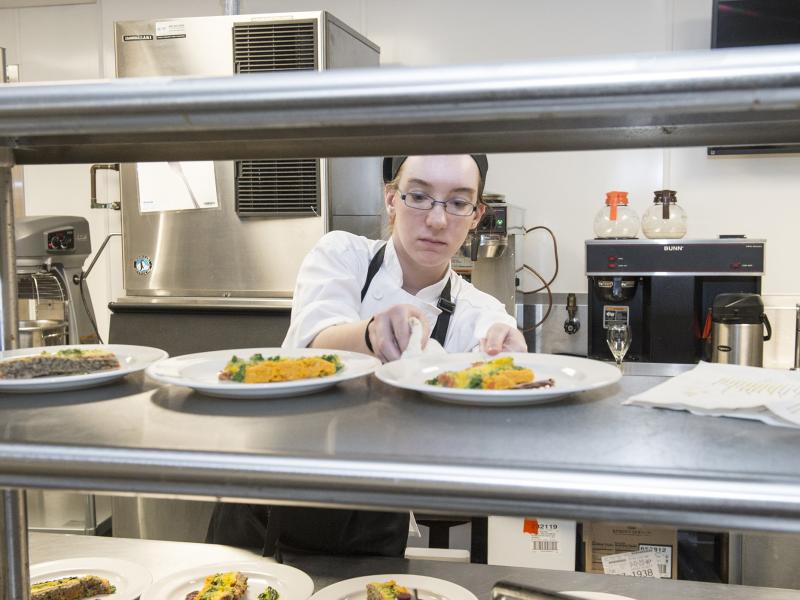
Get a start in the city's growing hospitality industry with our Culinary Arts Proficiency Certificate program. You'll learn about food preparation, baking, menu planning, food safety and other skills required for possible entry-level employment as a cook within the food industry. In addition, you will have access to experienced faculty who will provide hands-on learning in our state-of-the-art culinary kitchens and classrooms. Upon completion, the courses may be applied to the Culinary Arts Associate in Applied Science degree.
Course Sequence
Launch Your Career in Culinary Arts
- Food Service Managers – est. salary $64,211
- Chefs and Head Cooks – est. salary $61,325
- Cooks, Short Order – est. salary $36,205
- Cooks, Institution and Cafeteria – est. salary $41,806
Career Outlook
Median Salary of First-Line Supervisors of Food Preparation and Serving Workers
Number of Jobs in the Region
10-year Job Outlook in the Region for Food Preparation Worker
First-Line Supervisors of Food Preparation and Serving Workers
Perform food preparation and serving duties and perform various financial activities, such as cash handling, deposit preparation, and payroll.
Starting Pay: $35,014
Typical Tasks
- Compile and balance cash receipts at the end of the day or shift.
- Resolve customer complaints regarding food service.
- Present bills and accept payments.
- Perform food preparation and serving duties, such as carving meat, preparing flambe dishes, or serving wine and liquor.
- Inspect supplies, equipment, and work areas to ensure efficient service and conformance to standards.
- Train workers in food preparation, and in service, sanitation, and safety procedures.
Let's Get Started