

Alternative Fuels — Carbon Based Fuels Proficiency Certificate
Add to your automotive technology resume! Learn to service natural gas, ethanol, methanol, biodiesel, compressed natural gas, liquefied petroleum gas (LPG), and hydrogen engines.
-
Program Duration: Short-term
-
Degree Type: Proficiency Certificate
-
Total Credit Hours: 18

About This Certificate
Students who complete the Proficiency Certificate will be prepared to obtain employment in a small shop, dealership, or franchise-based repair facility. When completed, the courses may be applied towards the Automotive Technology Associate in Applied Science Degree.
Course Sequence
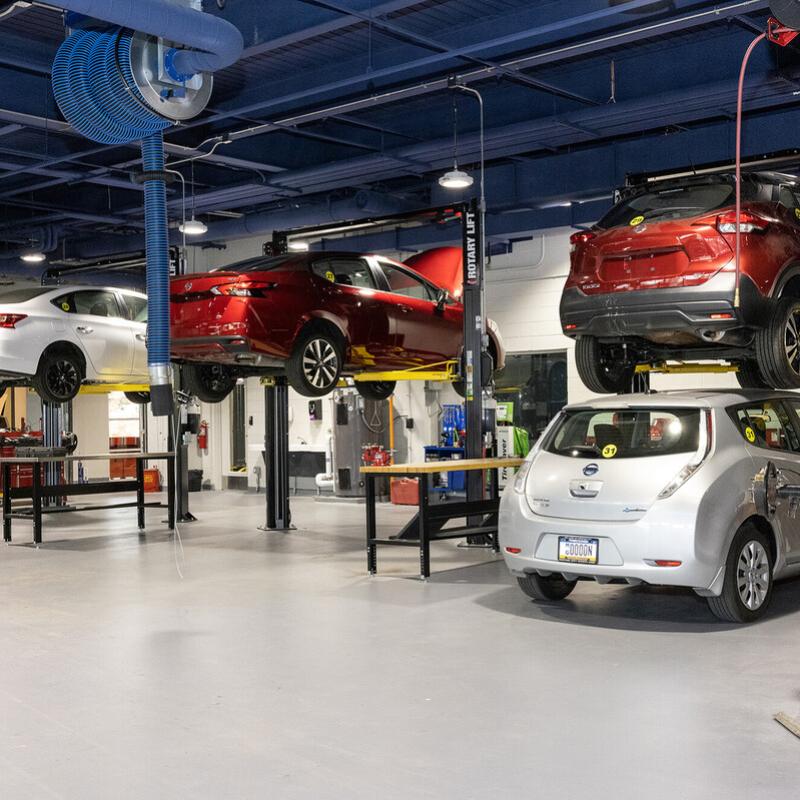
Launch Your Career in Carbon Based Fuels
- Automotive Engineering Technicians - est. salary $71,336
- Electronic Equipment Installers and Repairers, Motor Vehicles - est. salary $50,075
- First-Line Supervisors of Mechanics, Installers, and Repairer - est. salary $85,857*
- Automotive Service Technicians and Mechanics - est. salary $52,534
Career Outlook
Median Salary for Automotive Service Technicians and Mechanics
Number of Jobs in the Region
10-year Job Outlook in the Region for Automotive Service Technicians and Mechanics
Automotive Service Technicians and Mechanics
Inspect vehicles for damage and record findings, make necessary repairs and adjustments on all systems of the vehicle such as brakes, power systems, steering systems, wheel systems, linkages and more.
Starting Pay: $32,287
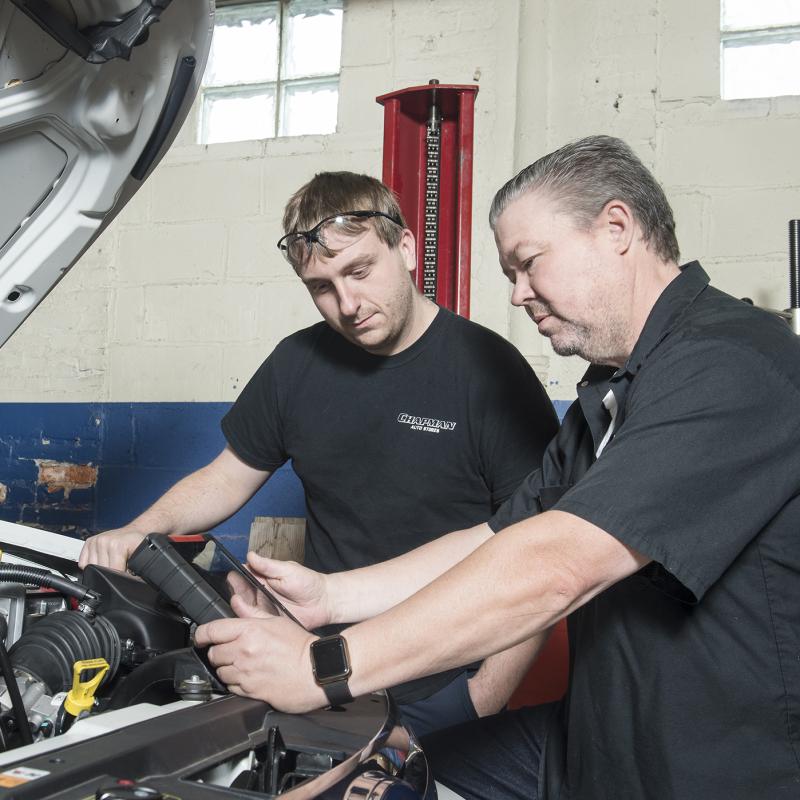
Typical Tasks
- Test drive vehicles and test components and systems, using equipment such as infrared engine analyzers, compression gauges, and computerized diagnostic devices.
- Follow checklists to ensure all important parts are examined, including belts, hoses, steering systems, spark plugs, brake and fuel systems, wheel bearings, and other potentially troublesome areas.
- Overhaul or replace carburetors, blowers, generators, distributors, starters, and pumps.
- Estimate costs of vehicle repair.
- Repair and service air conditioning, heating, engine cooling, and electrical systems.
- Troubleshoot fuel, ignition, and emissions control systems, using electronic testing equipment.
Under the Hood with Auto Tech Alumna
Let's Get Started
