

‘From CCP to Berkeley Law,’ Fatima Abbas uses her education to support underserved communities
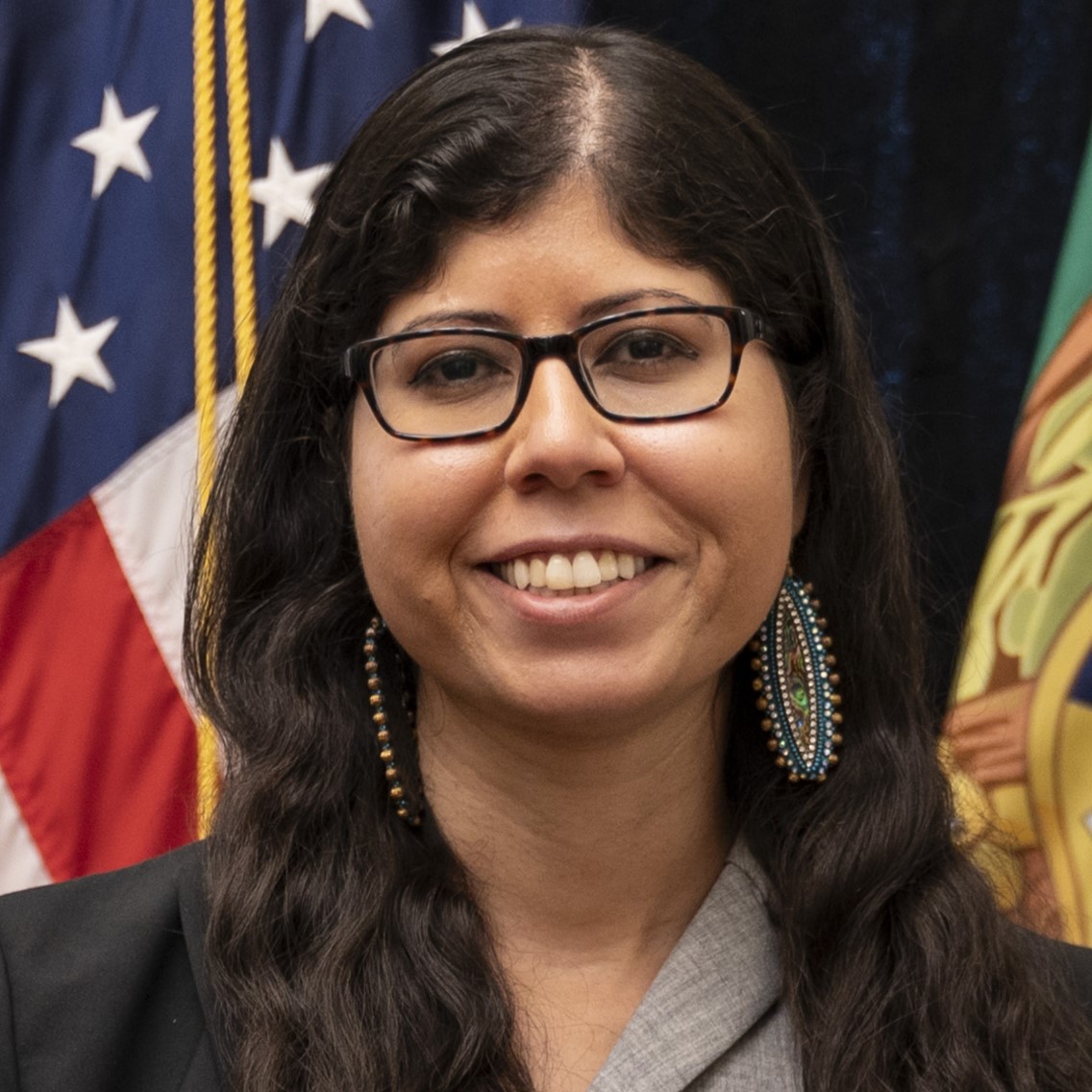
Fatima Abbas is a 2005 Community College of Philadelphia graduate and was this year’s Black & Gold Gala Alumni Achievement Award honoree. She was recently featured in The Philadelphia Inquirer for her many accomplishments.
Fatima currently serves as director of Tribal and Native Affairs at the U.S. Treasury Department. She spoke with CCP for a Q&A about her upbringing, accomplishments and motivations.
How would you describe yourself?
I would describe myself as a professional dedicated to supporting economic development in underserved communities with a focus on indigenous communities. My interest is based on my background growing up in Philly in a low-income neighborhood and being of mixed heritage—my mom is Native and my dad is Pakistani. Both life and professional interests led me to this pathway.
What do you do in your role as director of Tribal and Native Affairs?
I help the 574 tribes in the US gain access to capital so that they can run businesses and generate revenue for health care. So, an example would be providing small business financing so they can start a health care clinic in a rural area. And that health care clinic both provides services, but also provides revenue so that they can further develop. The work that we do provides access to capital in the private sector for indigenous communities.
What was your path to CCP like?
I mostly grew up in Philadelphia, in the Feltonville-Olney section. I was homeschooled for high school, and I graduated when I was 16. I was ready to go to college academically, but I wanted a more supported atmosphere, so that led me to CCP. All the programs that existed, and the really intense focus on retention and pursuing different opportunities, really attracted me to CCP.
And one of the things that really attracted me was the transfer programs. It wasn’t just a two-year college, it was a two year as a pathway to a four year. It was a pathway to a graduate education. So, that’s what really led me to CCP. And I had heard so many success stories from folks who went to CCP that went on to lots of excellent other schools.
When I went, my brother went after me and then my mom also went. We started a tradition in my family.
What was it about CCP that made it a family affair?
It was just a very welcoming environment. And there were people from all kinds of different backgrounds. My mom was coming back to school after she had gotten an associate degree from Peirce College in, I think, the ‘70s. She had always wanted to go back to school, but she was the full-time bread winner.
When I was in school, I was meeting all these people who were much older than me, but were her age and were going to school or going back to school. And that helped me encourage her and say that the school’s got a lot of training, they make it easy for you […] there weren’t difficult entrance tests, you didn’t need an SAT in order to get in, and the support to stay was big.
A lot of adults who were returning to higher education, they often had full-time jobs and that was the case with my mom. I learned about all these resources and I basically became the messenger for her through my study at CCP
Where did you go after CCP?
I transferred into Temple. When I was at Temple, I had gotten into the London School of Economics for a master program, but I couldn’t afford to go. I took the LSAT and ended up going to law school. I went to Berkeley Law. I pivoted from economics to law, but I ended up doing economic development.
From what I heard when I was at Berkeley, they really appreciated that I had talked about CCP in my essay as part of my educational journey. A lot of students come from Ivy League backgrounds. I had talked about being exposed to folks from so many backgrounds and my neighborhood and that made me really passionate about economic development for underserved communities. I was able to get into a top school without any Ivy League background because they also value public education.
How did CCP help prepare you for what followed?
At the US Treasury Department, I would say it’s majority Ivy League because the treasury is mostly finance and economics. It is a very rarefied, privileged world, but when I talk to people about my background and my education, I always say, “I went from CCP to Berkeley Law.”
While my background is not common in my area, I would say it is appreciated because it shows tenacity. It’s the American dream to move up.
The professors that CCP had, they helped me to expand my options about what I might want to do and also really look at my skillset. I was going to go into economics or public health. My professors said, “Oh you’re really good at writing, you’re good at public speaking, you might want to consider law,” which is eventually the pathway that I ended on.
I feel like the smaller class sizes really help the professors see talent in the classroom and encourage them. The base courses that I took all transferred to Temple, so that was great. And the quality of education was good, so when I went to Temple and took higher level classes, I was prepared. The curriculum that CCP had was preparing students for the next step. It wasn’t easier. It was part of that pathway.
What would you tell someone considering CCP or someone on the fence about going to college at all?
I would say if you’re on the fence about going to college, the entry requirements aren’t difficult for going to CCP. […] You can just take one course or maybe two—that’s actually how I started at CCP. I didn’t take a full course load because I was 16. I took one or two courses. I was like, “Oh, I can do this!” And then I took more.
Think beyond the two-year college. Ask, what career would you like to have? And then chart your courses, learn about the transfer programs, and then really tap into the alumni network. Especially in a city like Philadelphia, CCP is so embedded in the community that there are a lot of people in different areas who might have begun at CCP. That alumni network while you’re a student is as valuable as it is when you depart and become an alum.
Categories: Student Spotlight
More News
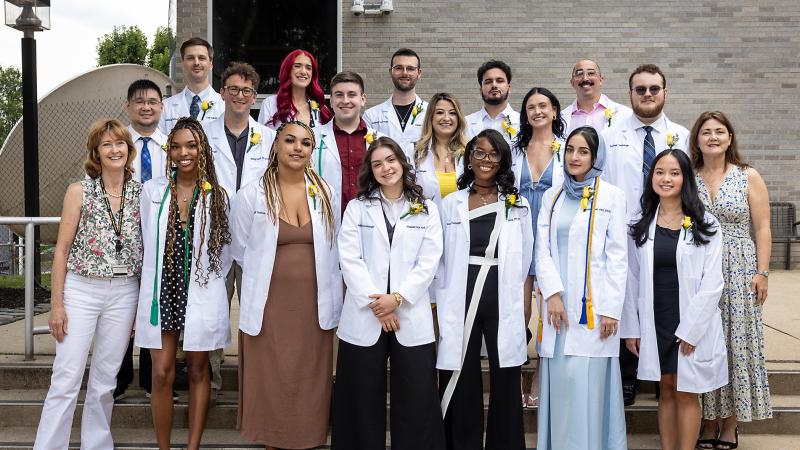
Diagnostic Medical Imaging Graduates Achieve 100% Examination Pass Rate for 22nd Consecutive Year
This year, Diagnostic Medical Imaging (DMI) students extended a remarkable feat for the 22nd year: achieving a 100 percent first-attempt credentialing examination pass rate. For more than two decades, every student in the program passed the necessary exams within three months of graduating from the program. This accomplishment is the direct result of a collective effort between faculty, staff, clinical partners, and administration working together toward the common goal of student success.
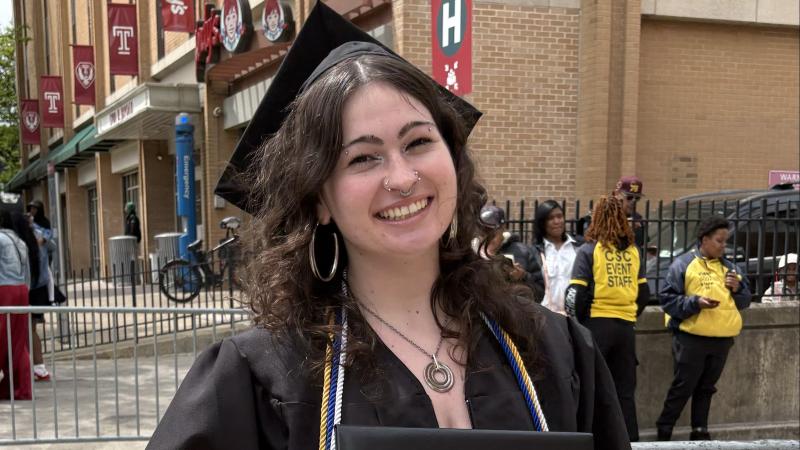
Rhythm and RISE to Honor Student Talents with Several Activations
Meet the talented CCP students showcasing their work at Rhythm and RISE on June 9. From live musical and theater performances to interactive art, these students are highlighting the vibrant creative community at the College!
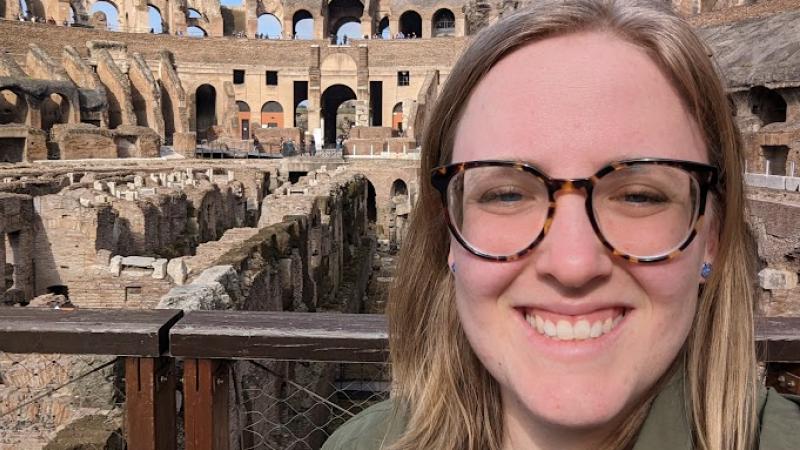
Molding Rhythm and RISE: Natalie Gustafson, Live Wheel Throwing Demonstration
Natalie Gustafson is a Biology student at CCP with an interest in and talent for art. During Rhythm and RISE, she will be joining another student, Sofia Shapiro, on the pottery wheel, demonstrating live wheel throwing for guests to enjoy.